
2026-09-19 · Mark Jensen
5-Inch vs 6-Inch Gutters: How to Choose the Right Size
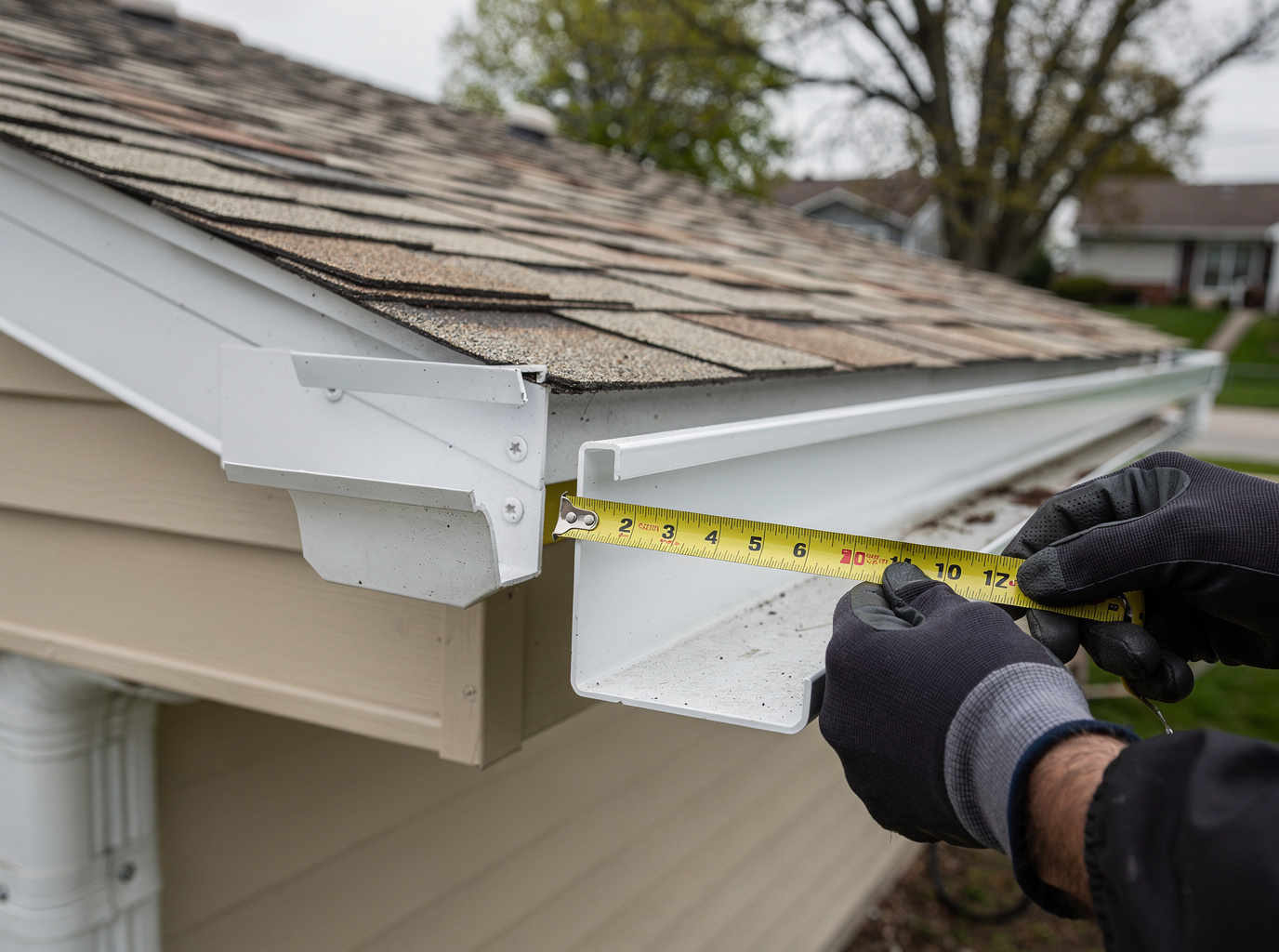
Choosing between 5-inch and 6-inch gutters for your Terre Haute home primarily depends on your roof's size, its pitch, and the expected volume of rainwater runoff. For most homes in areas like Farrington's Grove or Twelve Points with standard rooflines and square footage up to around 2,000–2,500 square feet, 5-inch gutters are often sufficient. However, if your home has a larger roof area, a steep pitch, or if you've experienced issues with overflowing gutters during the heavy rains common in our humid continental climate, 6-inch gutters are typically the more appropriate and effective solution. This larger size offers significantly increased capacity, providing better protection against water damage to your foundation, landscaping, and siding.
Understanding Gutter Capacity and Local Rainfall
The primary function of any gutter system is to channel rainwater safely away from your home's foundation. In Vigo County, especially with our hot summers and humid continental climate, heavy downpours are a regular occurrence, particularly during spring and summer. A 5-inch K-style gutter can handle approximately 1,200 square feet of roof area per downspout, while a 6-inch K-style gutter can manage around 2,200 square feet. This difference in capacity is crucial when considering the potential for water pooling around your foundation from gutters, which can lead to costly structural issues. Homes near the Wabash River, for instance, might experience higher humidity and more consistent rainfall, making robust drainage even more vital. We often see homes in areas like Downtown or near Indiana State University with varying roof sizes, necessitating a careful assessment of each property's specific needs.
Factors Influencing Your Gutter Size Decision
Several key factors should guide your decision between 5-inch and 6-inch gutters. First, consider your roof's square footage. A larger roof collects more water. Next, the pitch of your roof plays a significant role; steeper roofs cause water to rush off faster and in greater volume, demanding higher capacity. The number and placement of downspouts also impact efficiency, as even the largest gutters can overflow if downspouts are insufficient or improperly spaced. Finally, our local weather patterns, characterized by intense, short-duration storms, mean that even average-sized roofs can benefit from the extra capacity of 6-inch gutters to prevent overflowing. If you've noticed your gutters overflowing during heavy rain, it's a clear sign your current system might be undersized or compromised.
When 5-Inch Gutters Are Sufficient for Terre Haute Homes
For many traditional homes in Terre Haute, especially those built in the mid-20th century with standard roof sizes and moderate pitches, 5-inch gutters are perfectly adequate. These are typically found on homes with a roof footprint of up to 2,000–2,500 square feet. They are a cost-effective choice for properties where water runoff is manageable and heavy downpours don't consistently overwhelm the system. For instance, smaller bungalows or ranches in neighborhoods like Twelve Points, which might have a simpler roof design, often perform well with 5-inch seamless gutter installation. They are less visually prominent than 6-inch gutters, which can be a consideration for homeowners who prefer a more discreet appearance. Our team at 7670 S State Rd 63, Terre Haute, IN 47802, USA can assess your specific roof and recommend if 5-inch gutters will provide sufficient protection.
The Advantages of 6-Inch Gutters for Larger Properties
For larger homes, or those with complex or steep rooflines, 6-inch gutters offer a significant advantage. Their increased capacity—roughly 40% more than 5-inch gutters—is invaluable for managing the substantial water runoff generated by expansive roofs, especially during the intense summer storms we experience in Vigo County. Properties with multiple gables, dormers, or a high roof pitch, common in some of the newer developments or larger historic homes in Farrington's Grove, will greatly benefit from the superior drainage provided by 6-inch systems. This extra capacity is also crucial for commercial gutter installation projects or apartment & multifamily gutter installation, where the sheer volume of roof area demands robust water management. While they represent a slightly higher initial investment, the enhanced protection against foundation damage, landscape erosion, and fascia board rot often outweighs the cost difference in the long run.
Installation Considerations and Costs
The installation process for both 5-inch and 6-inch gutters is similar, but there are some nuances. 6-inch gutters are heavier and require more robust hangers and fasteners to ensure they remain securely attached to your home, especially when full of water. The cost difference between the two sizes is typically not as significant as many homeowners expect, often ranging from 15% to 25% more for 6-inch gutters. For example, if a 5-inch seamless gutter installation costs around $4–$6 per linear foot, a 6-inch system might be in the $5–$8 per linear foot range, depending on materials and complexity. When considering the long-term protection of your home's foundation and landscaping, this marginal increase in cost is often a worthwhile investment, particularly for properties prone to significant runoff or those located in areas with dense tree cover that might lead to gutters keep clogging with leaves.